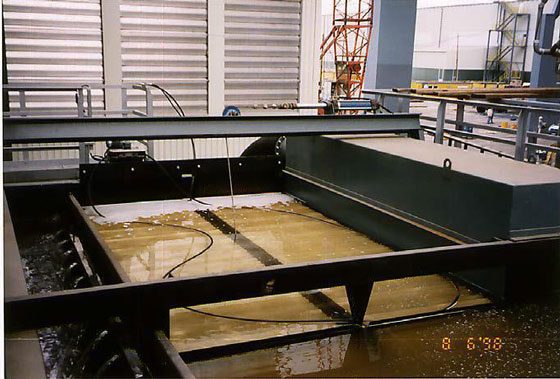
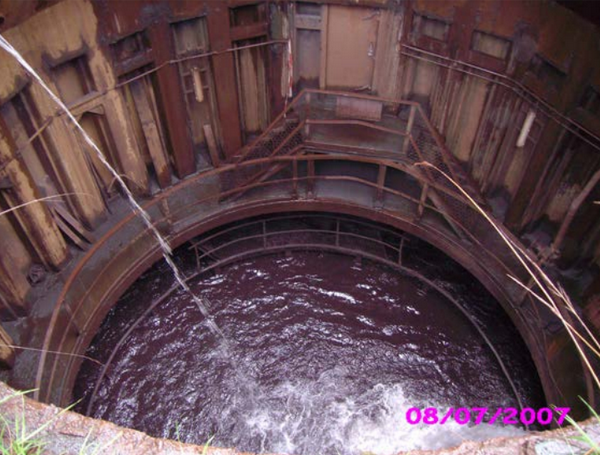
More Than Standard: FRIESS Oil Skimmers for Demanding Industrial Applications
Where standard solutions reach their limits, one of FRIESS’ particular strengths shows. For decades, FRIESS oil skimmers have proven themselves in industrial applications worldwide even under challenging operating conditions.
Our oil skimmers are designed for continuous operation in industrial environments. High-quality, carefully selected materials ensure excellent resistance, even when used with aggressive media and under demanding process conditions.
Depending on the application, ATEX-certified versions for potentially explosive atmospheres are also available. And if an off-the-shelf oil skimmer is not the ideal fit for your application, we develop and manufacture customized solutions ensuring you always get exactly the right solution for your specific requirements.
Upon request, our experienced FRIESS specialists can also handle installation and commissioning directly at your site. This means you get more than just an oil skimmer: you get a solution tailored to your application, from consultation and engineering through to smooth and reliable operation within your system.
Oil Skimmers as Tube Skimmers
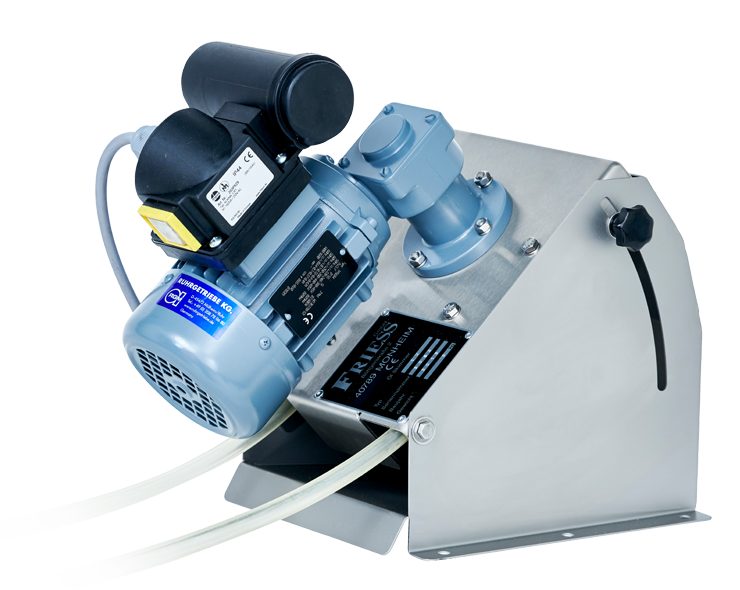
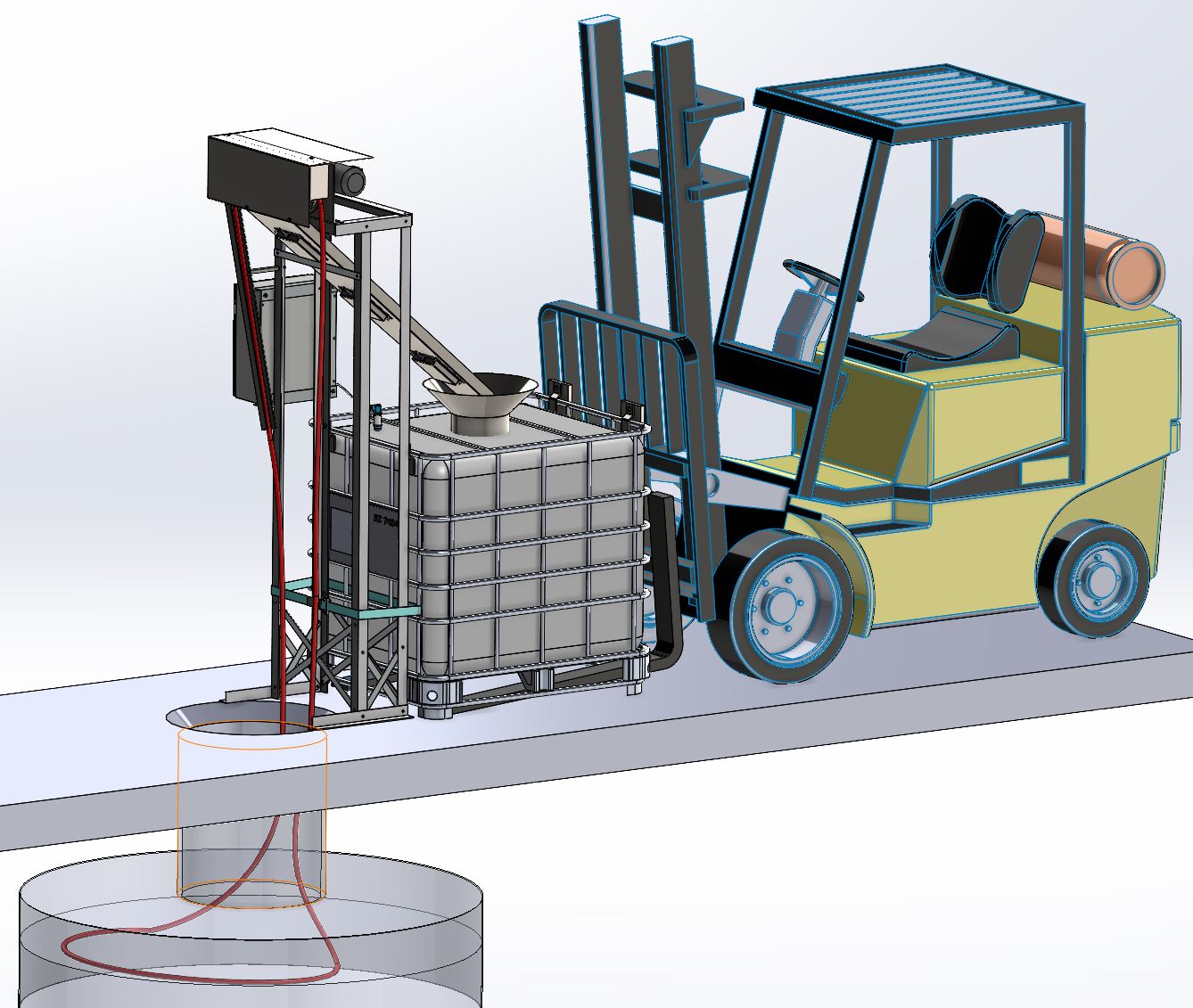
Tube skimmers are particularly suitable for the continuous removal of floating oil and grease across large surface areas. The oil collector tube floats freely on the surface of the liquid, allowing tramp oil to be effectively removed from both small tanks and large basins.
How Does a Tube Skimmer Work?
At the heart of the tube skimmer is a special oleophilic tube designed to attract and retain oil on its surface. The hollow oil collector tube floats directly on the liquid surface, positioning it precisely between the medium to be cleaned and the floating oil.
The tube, which is welded into an endless loop, continuously passes through the oil skimmer. Oil adhering to the tube is scraped off inside the unit and then discharged separately. The cleaned tube then returns to the liquid surface, and the process begins again.
A particular advantage of this principle is the flexible length of the oil collector tube. This allows the tube skimmer to be adapted to different tank sizes and applications – from small tanks on machine tools to large cooling and process basins or ponds. In this way, floating tramp oil can be removed continuously across large surface areas.
Where Are Tube Skimmers Used?
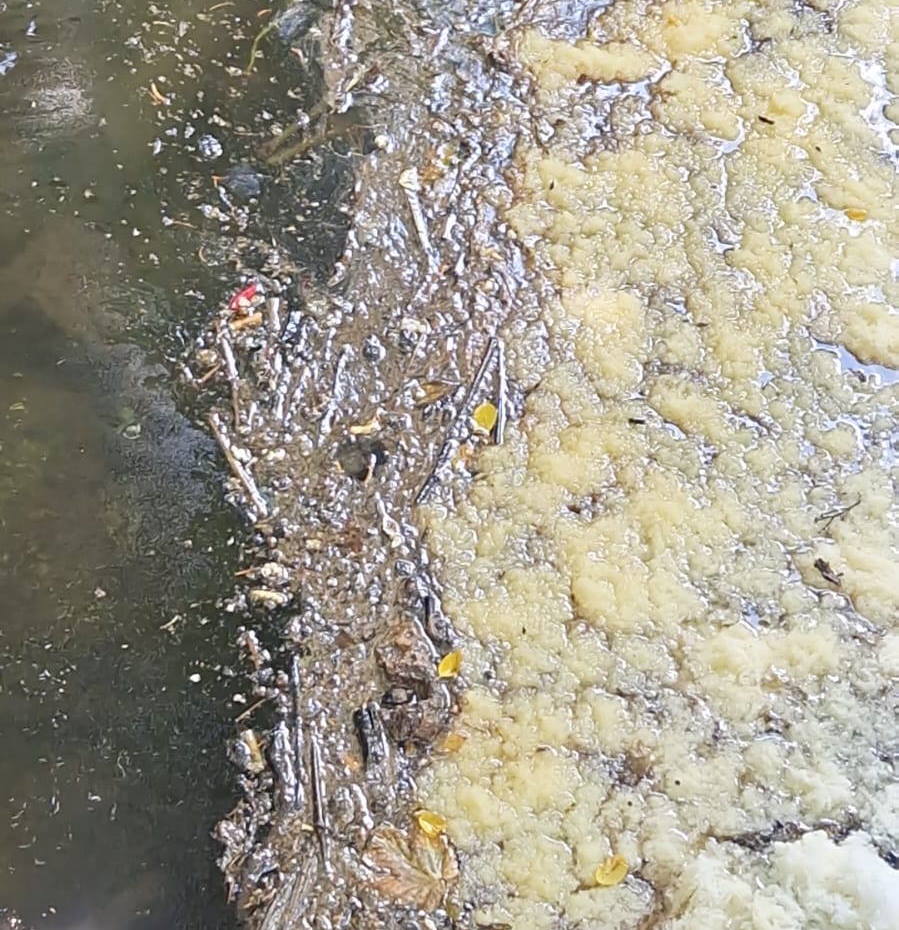
Tube skimmers are used wherever floating oil or grease need to be removed from large liquid surfaces. The robust operating principle is also suitable for contaminated industrial environments and highly viscous oils.
Typical applications include:
Advantages of Tube Skimmers
Thanks to their simple and robust operating principle, tube skimmers offer significant advantages, particularly in continuous industrial operation:
- High removal capacity for larger volumes of oil
- Oil removal across large surface areas
- Flexible adaptation to different tank and basin sizes
- Suitable for demanding media – even with extremely high levels of contamination and highly viscous oils
- Durable scrapers for continuous operation
- Low maintenance requirements thanks to the robust design
Removing Oil with a Belt Skimmer
Belt skimmers are a compact and economical solution for continuously removing smaller quantities of floating tramp oil from liquid surfaces. They are particularly common on machine tools and small metalworking fluid tanks where installation space is limited and fairly small amounts of oil accumulate.
How Does a Belt Skimmer Work?
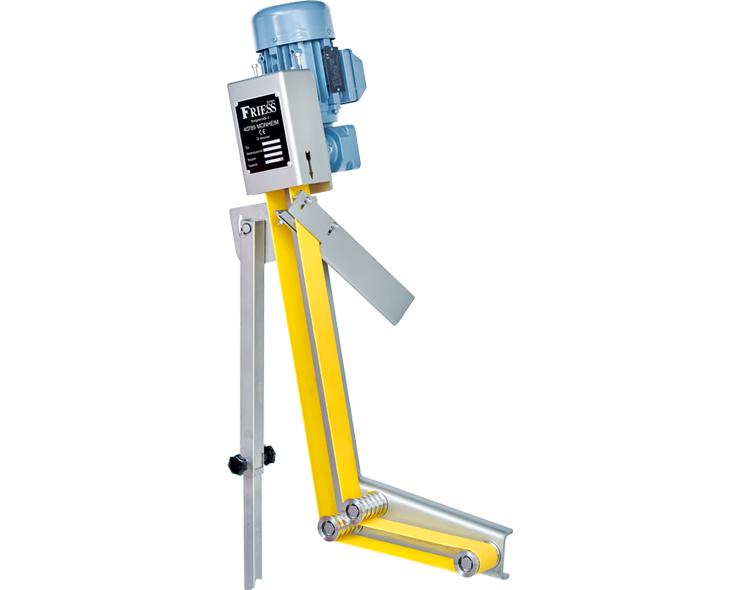
The central element of a belt skimmer is an endless skimmer belt driven by a motorized drive roller. A guide roller directs the belt down into the tank so that part of the belt is immersed in the floating oil layer.
The tramp oil adheres to the surface of the skimmer belt and is carried upward out of the tank by the continuous movement of the belt. At the top of the belt skimmer, scrapers remove the adhering oil from the belt. The separated oil is then discharged separately, while the cleaned belt is returned to the tank.
Thanks to this simple design, belt skimmers operate continuously and require very little space. Depending on the design, they can also accommodate fluctuations in the liquid level.
Where Are Belt Skimmers Used?
Belt skimmers are particularly suitable for small tanks and applications involving manageable quantities of tramp oil. A typical application is metalworking, where tramp oils such as hydraulic or lubricating oils need to be removed from metalworking fluids.
Typical applications include:
- CNC turning and milling machines
- Machine tools and machining centers
- Small metalworking fluid and emulsion tanks
- Metalworking and machining
- Compact washing and process systems
Especially in small metalworking fluid tanks, the comparatively low removal capacity of a belt skimmer is often entirely sufficient. At the same time, its compact design and simple construction make it an economical solution for these applications.
For larger basins, higher volumes of tramp oil or oil contamination spread across a large surface area, a tube skimmer is often the better choice. While a belt skimmer primarily collects oil within its immediate operating area, a tube skimmer can cover a significantly larger area of the liquid surface.
Advantages of Belt Skimmers
For small tanks and low volumes of tramp oil, belt skimmers offer several key advantages:
- Compact design and small footprint
- Economical solution for small-scale applications
- Simple and proven operating principle
- Continuous removal of floating tramp oils
- Suitable for small metalworking fluid tanks and machine tools
- Depending on the design, also suitable for fluctuating liquid levels
More information about our belt skimmers can be found here!
When Is a Tube Skimmer the Better Choice?
The operating principle of a belt skimmer has certain limitations in larger or more demanding applications. The skimmer belt only covers a limited area of the liquid surface and does not generate any significant surface flow itself. As a result, floating oil located farther away may reach the skimmer only slowly or, in some cases, not at all.
For larger volumes of oil, heavily contaminated media or larger basins, a tube skimmer can also provide a more robust and higher-capacity solution. With belt skimmers, particles and sludge can also cause increased wear on the scrapers or – depending on the design – lead to deposits and blockages in the discharge system.
In short: For small tanks, low volumes of tramp oil and limited installation space, a belt skimmer is a compact and economical solution. However, when larger liquid surfaces or higher volumes of oil need to be handled, a tube skimmer often offers significant advantages.
Oil Skimmer or Oil Separator – What Is the Difference?
Oil skimmers and oil separators have a similar objective: separating oil and grease from water or other liquids. Both methods make use of the difference in density between the liquids. However, they differ fundamentally in how they work: while an oil skimmer continuously removes oil floating on the surface, an oil separator allows suspended oil to rise to the surface before removing it.
How Does an Oil Separator Work?
An oil separator essentially consists of a tank through which the liquid to be treated flows. Inside the separator, the flow is slowed down, giving oil and grease sufficient time to rise to the surface. Special internal components can further support this separation process and improve separation efficiency.
The oil that has risen to the surface collects there. A baffle or submerged outlet pipe prevents this oil layer from being discharged from the separator together with the liquid below. The oil is then removed from the surface of the separator, often via an overflow weir.
An oil separator is therefore particularly suitable for applications where the liquid first needs to be calmed so that a sufficiently distinct oil layer can form on the surface. This is often the case in highly turbulent systems or systems with very powerful pumps.
How Does an Oil Skimmer Work?
An oil skimmer operates where the oil has already accumulated on the liquid surface. It continuously collects the floating tramp oil, removes it from the process and transfers it to a separate collection tank.
Unlike an oil separator, an oil skimmer therefore requires the oil to have sufficient time to rise to the surface within the existing system. With highly turbulent liquids, the flow may therefore need to be calmed beforehand.
When Should You Use an Oil Skimmer and When an Oil Separator?
Which method is more suitable depends primarily on the conditions of the specific application. If the liquid is sufficiently calm and the tramp oil is already floating on the surface, an oil skimmer can remove the oil directly and continuously.
In systems with strong currents or turbulent media, however, the oil may not have sufficient opportunity to rise to the surface. In such cases, an oil separator provides the necessary settling zone, creating the conditions required for reliable oil-water separation.
Combining Oil Separators and Oil Skimmers for Optimum Performance
In many industrial applications, there is no need to choose between the two methods. Oil separators and oil skimmers can be effectively combined, complementing each other perfectly.
The oil separator first calms the liquid, allowing the oil it contains to rise to the surface, where it is retained. An integrated oil skimmer then continuously removes the accumulated oil from the separator. This is often the most reliable way of removing oil from the separator.
This is precisely the principle used in FRIESS Skimmtelligent oil separators. They are particularly suitable for applications where the liquid is too turbulent for the direct use of an oil skimmer. By combining flow calming, separation and continuous oil removal, the advantages of both methods are brought together in a single system.
Retrofitting Existing Oil Separators with an Oil Skimmer
Existing oil separators can also be retrofitted with an oil skimmer. This allows floating oil to be continuously and reliably removed from the separator. Many oil separators retain oil effectively, but removing it via an overflow weir can often be unreliable or extremely maintenance-intensive.
Adding an oil skimmer can significantly increase the effectiveness of the oil separator and reduce the required maintenance intervals.
In short: The oil separator creates the conditions required for reliable separation and retains the floating oil. The oil skimmer then continuously removes it. Depending on the application, the two systems can be used individually or combined to create a particularly effective solution.
Learn more about FRIESS “Skimmtelligent” oil separators here!
FRIESS – Oil Skimmer Manufacturer for Over 50 Years
Since 1972, FRIESS has been developing and manufacturing “Made in Germany” oil skimmers for a wide range of industrial applications and industries. More than 50 years of experience in oil-water separation continuously contribute to the development and manufacturing of our products.
In addition to oil skimmers, FRIESS offers further solutions for oil-water separation, metalworking fluid maintenance, as well as oil cleaning and treatment. Our goal is to make processes more economical and sustainable: extending fluid service life, conserving resources, reducing disposal volumes and thereby lowering operating costs. At FRIESS, cost-effectiveness and environmental protection go hand in hand.
Buying a FRIESS Oil Skimmer – It’s That Simple
Which oil skimmer is best suited to your application depends on a few basic factors. To help us quickly recommend the right model for your requirements, we only need some information about your application. Upon request, we will be happy to provide you with our oil skimmer questionnaire as a PDF.
What Information Do We Need?
The following information is particularly helpful when selecting the right oil skimmer:
- Type and quantity of tramp oil or grease: What type of oil or grease needs to be removed, and approximately how much accumulates per day?
- Liquid to be cleaned: Is it, for example, a metalworking fluid or emulsion, cooling water, washing water, process water or wastewater?
- Tank and installation conditions: What are the dimensions of the tank or basin? Relevant factors include its length, width or diameter, as well as the available installation options.
- Free board and liquid level: What is the free board between the liquid level and the top of the tank and are there significant fluctuations in the liquid level during operation?
- Special operating conditions: Are there any specific requirements regarding temperature, aggressive media, contamination or explosion protection?
Based on this information, our specialists can assess your requirements and recommend a suitable oil skimmer for your application. For special installation conditions or requirements, customized adaptations and special designs are also available.
Fast Delivery and Easy Commissioning
Our standard oil skimmers can generally be delivered within one week. The units are designed for straightforward installation and commissioning. If your application requires a special installation, our FRIESS installation service is also available on site upon request.
Not sure which oil skimmer is right for you? Contact us – we will support you from selecting the right unit through to successful commissioning.
➦FAQs: frequently asked questions
What is an oil skimmer?
An oil skimmer is a device used to remove floating oils and greases from the surface of liquids. It is commonly used in metalworking fluid tanks, washing systems, process tanks, and wastewater treatment applications. The oil skimmer continuously collects floating tramp oil from the surface and removes it separately. This can help improve the quality of the process fluid, extend its service life, and reduce maintenance requirements.
How does an oil skimmer work?
An oil skimmer uses the different properties of oil and water or water-based fluids to remove floating tramp oil from the surface. Depending on the design, a rotating belt, tube, or disc collects the oil. The adhering oil is then removed from the skimming element (belt, tube or disc) by a scraper and discharged into a separate container. This process can operate continuously, helping to keep the process fluid clean and extend its service life.
What types of oil can an oil skimmer remove?
An oil skimmer can remove various types of tramp oil floating on the surface of a liquid. These include hydraulic oils, lubricating oils, machine oils, and other oils that do not mix with water. Oil skimmers are commonly used to remove tramp oils from metalworking fluids, washing fluids, and process water. The effectiveness of the oil removal depends on factors such as oil viscosity, temperature, fluid composition, and the type of oil skimmer used.
Which oil skimmer is suitable for metalworking fluids?
Oil skimmers for metalworking fluids should reliably remove floating tramp oils, such as hydraulic, bedway, and lubricating oils, while minimizing the loss of metalworking fluid. Belt, tube, and disc skimmers are commonly used for this purpose. The most suitable oil skimmer depends on factors such as tank size, oil contamination, accessibility, fluid level, and the required removal capacity. Selecting a skimmer that is properly matched to the application ensures efficient tramp oil removal and can help improve the quality and service life of the metalworking fluid.
What is the difference between an oil skimmer and an oil separator?
An oil skimmer removes only oil floating on the surface of a liquid. To do this, the oil is collected using a belt, hose, or disc and stripped off and discharged separately. An oil separator, on the other hand, separates both oil and water that are still mixed together and have not yet formed separate phases, as well as oil that is already floating on the surface. Oil skimmers are installed directly on the system, while oil separators are installed as separate systems next to the actual tank or basin. This enables oil separators to use gravity or coalescence to separate oil from water that does not rise to the surface on its own due to severe turbulence in the main system or extensive mixing caused by pumps or agitators. Which solution is more suitable depends on the application and the specific circumstances.
What size oil skimmer do I need?
The correct size of an oil skimmer depends on the specific application. Important factors include the size and geometry of the tank, the amount of tramp oil present, the required removal capacity, the fluid level, and the available installation space. A larger tank does not necessarily require a larger oil skimmer – it is more important to match the skimmer type and capacity to the actual oil load and operating conditions. For optimal sizing, the key application parameters should therefore be considered when selecting the oil skimmer.
What is the flow rate of an oil skimmer?
The removal capacity of an oil skimmer depends on its design, oil viscosity, oil layer thickness, and the specific operating conditions. FRIESS offers oil skimmers for a wide range of capacities: the compact 1U model, for example, removes 2 to 30 liters per hour, the W20 and W40 models up to 230 liters per hour, and the high-performance S100 tube skimmer up to 500 liters of oil per hour. This allows the skimmer capacity to be matched to the tank size and level of oil contamination.